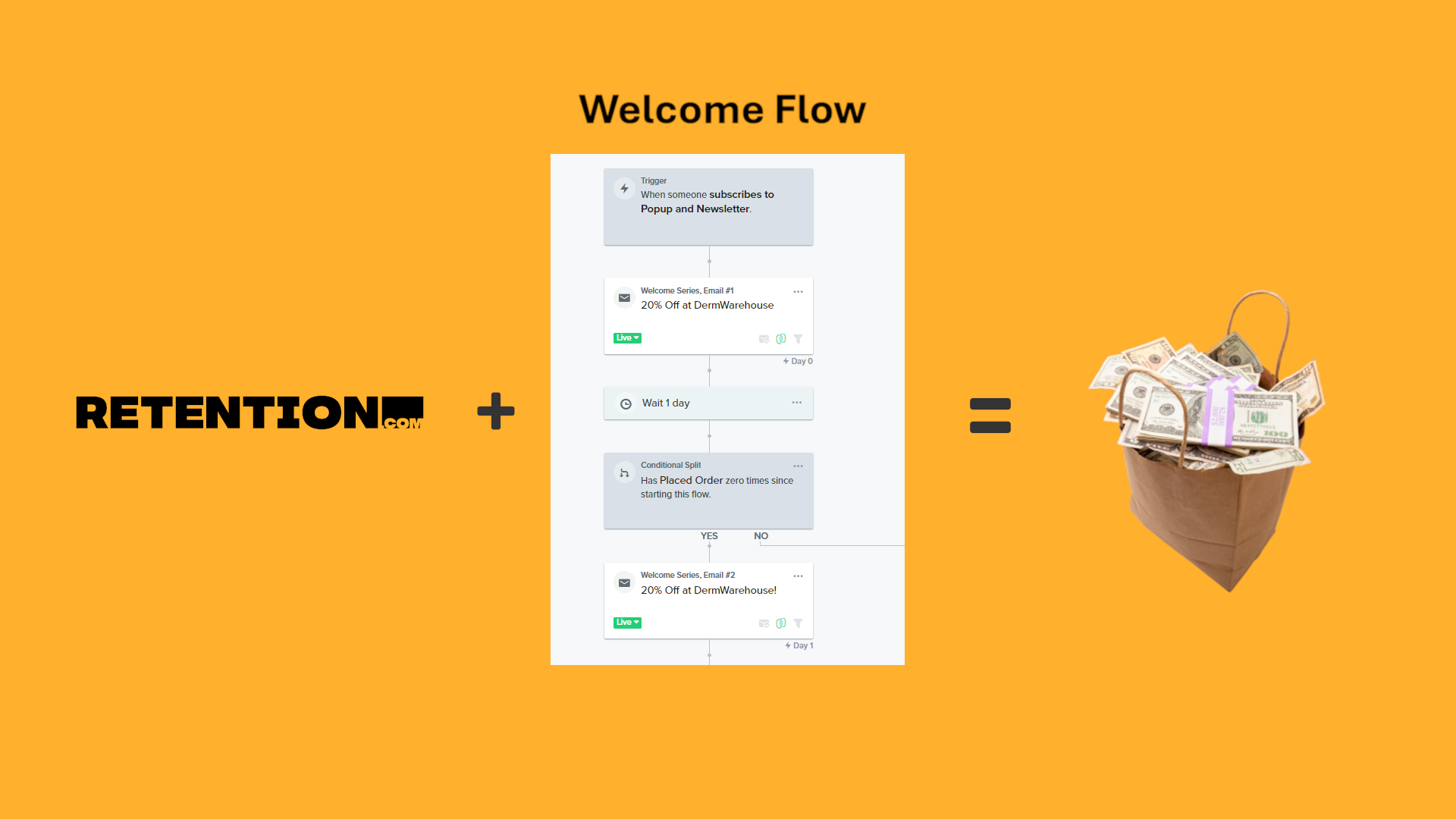
TL;DR: Retention.com captures the contact information of anonymous visitors to your online store. How you engage and monetize this new audience is up to you. The following is an example of how Email Pulse can enhance the Retention.com playbook.
About Retention.com
Retention.com is the well-publicized story of a company that discovered a little-known technicality: they can utilize the implicit consent of anonymous visitors, rather than requiring explicit consent directly on the brand’s site, to capture contact information from these anonymous visitors.
They act as a middleman, leveraging 3rd-party opt-ins from publishers whose terms of service stipulate that they may sell your data. According to the company’s materials, this practice is legal in the US and compliant with the CAN-SPAM Act.
When they introduced this offering, it was met with skepticism and many online brands raised their eyebrows. The reality today is that thousands of online brands are using their service, and what’s even more impressive is that high-profile customers are providing testimonials on their site.
At its core, the Retention.com solution is simple: it helps you extend the buyer’s store visit by identifying abandoners, allowing you to subsequently engage them via email or SMS, and thereby encourage their return to your store.
Undoubtedly, the capability to expand your contact list through Retention.com’s identity capture is highly valuable and can significantly lower your customer acquisition costs. However, this tool alone does not constitute a complete solution. The responsibility falls on you to effectively utilize and monetize it.
What is identity resolution in marketing?
Identity resolution in marketing is the process of integrating multiple identifiers across different devices and platforms to construct a unified, comprehensive view of individual consumers.
How Identity Resolution Works
- Data Collection: Identity resolution starts with gathering data from various sources, such as online behavior, mobile app usage, and offline interactions.
- Data Integration: The collected data points are integrated using sophisticated algorithms. This may use deterministic matching (directly links data using exact matches) or probabilistic matching (uses statistical analysis to link data points based on likelihood).
- Creating a Unified Customer Profile: The end goal is to create a comprehensive profile for each customer, reflecting their interactions across all platforms and devices.
Is identity resolution effective for ecommerce sites?
Identity resolution can be highly appropriate and beneficial for ecommerce sites, provided it is implemented in a legal and ethical manner.
- Enhances Personalization — Enables ecommerce sites to unify customer data from various touchpoints into a single customer profile, allowing for more targeted and personalized marketing.
- Improves Customer Experience — Creates a seamless and consistent shopping experience across different platforms.
- Increases Marketing Efficiency — Enables more effective segmentation, better targeted campaigns, and efficient use of marketing resources.
- Aids in Customer Retention — Helps recognize and react to customer behavior patterns to enhance loyalty programs or tailor offers.
- Facilitates Accurate Measurement — Unified customer profiles enable more accurate tracking and measurement of marketing effectiveness.
Is identity resolution in marketing legal?
Identity resolution is legal, but its legality hinges on how the data is collected, used, and managed, especially in light of stringent data protection regulations like GDPR, CCPA, and other similar laws.
Key considerations include: obtaining proper consent, purpose limitation, data minimization, transparency, adequate data security, respecting individuals’ rights to access and control their data, and maintaining accountability.
To navigate these legal considerations, it’s crucial for businesses to work closely with legal experts to ensure compliance with relevant local and international data protection laws.
More articles about identity resolution in marketing
-
Segment — “Identity Resolution: The Definitive Guide”: Provides a thorough overview of identity resolution, explaining how it helps attribute customer behaviors across all touchpoints to a single unified customer profile. Read more at Segment
-
Customers.ai — “Unlocking Customer Insights with Identity Resolution Marketing”: Discusses how identity resolution can offer a unified, 360-degree view of customers by connecting identifiers across devices and channels. Explore the insights at Customers.ai
-
Merkle — “Identity Resolution: How Marketers Can Get it Right”: Focuses on the practical applications of identity resolution in marketing, detailing how to recognize and target customers accurately across multiple platforms. Learn more at Merkle
Challenge: Highly Fragmented Buyer Journey
Retention.com, with its ability to capture anonymous web visitor identities, is a big step in the right direction. However, the challenge of attracting those audiences back to your online store and successfully monetizing them remains.
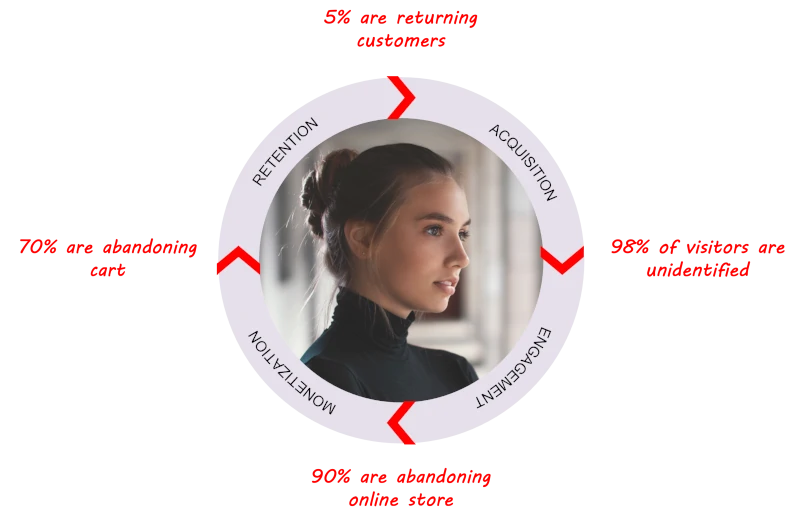
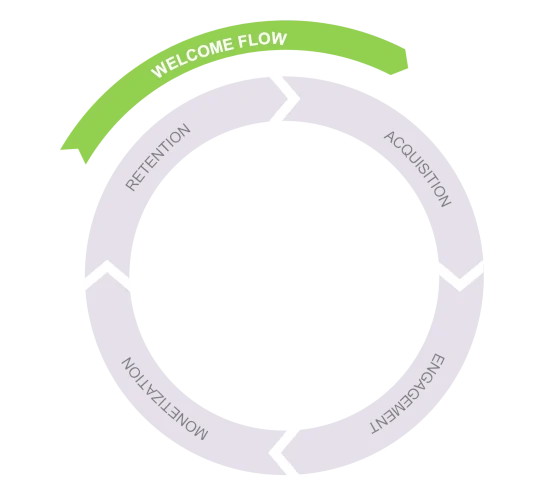
ACQUISITION: Over the last five years, the customer acquisition cost has surged by 60%. On a typical site, 98% of all visitors remain unidentified, with their product needs unknown.
ENGAGEMENT: Shoppers are increasingly unlikely to use site search or navigation features to discover products on their own. If a product of interest is not immediately visible, they tend to abandon the site. This behavior explains why 90% of all visitors leave without adding any product to their online cart.
MONETIZATION: Even when a shopper adds a product to their online shopping cart, a purchase is not guaranteed. Due to various factors, 70% of all online carts are abandoned.
RETENTION: Attracting store abandoners to revisit your site is a challenging task. Only 5% of site visitors are returning customers, primarily drawn back by significant product discounts.
Solution: Retention.com + Email Pulse
Whenever Retention.com captures a new contact for your email list, it’s both good news and bad news.
The good news is that Retention.com has successfully identified an anonymous visitor to your store, allowing you to reach out and continue promoting your products.
The bad news is that the person whose identity you just captured has already abandoned your store once. Attracting them back is a tricky exercise, and you can’t afford to lose them again.
That’s why it’s essential to supplement Retention.com with an app like Email Pulse — a customer retention solution that helps you more effectively attract email contacts back to your store, allowing you to better monetize your list and continually increase customer retention.
Improved Retention.com Playbook
Email Pulse offers many new possibilities to more effectively engage with new contacts provided by Retention.com. These additional capabilities are made possible with uplift modeling of email shopper metrics in your online store and use of advanced AI algorithms to identify the products most relevant to your target audiences.
1. ACQUISITION: Welcome Flow
The new contacts provided by Retention.com should be treated as an unfinished customer acquisition step — store visitors whose interest in your brand you still need to earn. Acting and engaging with new contacts promptly is essential.
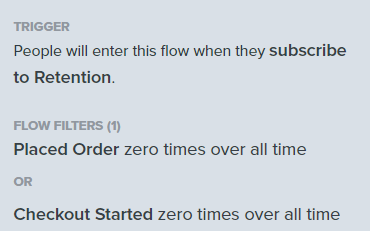
CHALLENGE: How to make the email flow more relevant to increase the number of newly captured contacts returning to your online store.
Standard Best Practices
Standard ecommerce best practices are focused on attracting shoppers back to the online store through price discounts.
Flow example:
- Welcome + Discount
- Discount + Meet the Team/Brand Story
- Discount + Best Sellers
A variation of this approach is to use event tracking features provided by Klaviyo to remind shoppers of items they recently viewed or abandoned in their shopping cart. While these features may produce some results, they often lack impact at scale.
Email Pulse
Rather than using emails to drive new contacts back to your store for an online shopping experience, we’re bringing the shopping experience directly into the email, blurring the line between the store and the email itself.
WHY: Every interaction with potential shoppers is precious. So, why not stage a rich ecommerce experience in your emails to increase engagement and reduce the number of steps to product discovery and purchase?
HOW: Email Pulse leverages online store product performance metrics, enabling you to effortlessly generate and deploy dozens of different types of product recommendations that are highly relevant to your new contacts.
2. ENGAGEMENT: Landing Page
Selecting the right landing page is crucial for the success of an email campaign. The initial page view serves as the bridge between the email and the online store experience.

Email marketers often take the online shopping experience for granted, thinking that generating enough click-throughs will naturally lead shoppers to use store navigation and search to find the products they want to buy.
Modern shoppers, especially those on mobile, are less likely to use navigation or search. If they don’t immediately see a product of interest, they are likely to leave.
Challenge: How to delight returning visitors and prevent store abandonment.
Standard Best Practices
Email marketers often direct email shoppers to landing pages featuring products they want to promote, without considering whether those products are likely to generate the desired sales. There’s an overreliance on price discounting, which negatively impacts margins and overall business profitability.
Email Pulse
Instead of focusing solely on the products you want to promote, Email Pulse allows you to enrich your emails with landing pages that promote items your target audience is likely to buy.
WHY: Utilizing relevant landing pages enhances both clickthrough rates and ecommerce metrics.
HOW: Email Pulse leverages online store product performance data, providing insights into the landing pages preferred by your target audience and the performance of individual products on those pages.

3. MONETIZATION: Products
The ultimate goal of email marketing is to connect the right shopper with the right product.

This is a challenging problem to solve, as you have very little data about your shoppers, and to make matters worse, the shoppers themselves often don’t know exactly what they want.

Challenge: How to quickly establish product-visitor fit with minimal available information.
Standard Best Practices
Email marketers are often hesitant to promote products directly, preferring instead to drive traffic to landing pages. When they do promote products, they typically focus on store best-sellers, which may not resonate with email shoppers or might not be the products with the best margins.
Email Pulse
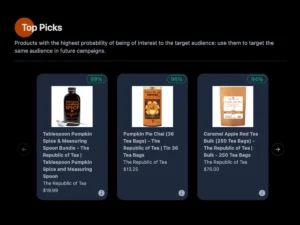
Email Pulse allows you to enrich your emails by highlighting lists of products your target audience is likely to buy.
WHY: By featuring products that your target audience is likely to buy, you’ll reduce unnecessary price discounting and increase both revenue and profitability.
HOW: Email Pulse uses AI algorithms that replace traditional buyer attributes with product interaction signals, which are a much better predictor of shopper product needs.

4. RETENTION: Brand Value
It’s easier to drive revenue from customers who have already made a purchase than to convince a store visitor to buy a product for the first time.

Brands face challenges in bringing existing customers back to their online stores. It’s common to see a retention cliff, where the share of returning visitors drops sharply just days after their first visit, leaving a significant unrealized revenue gap.
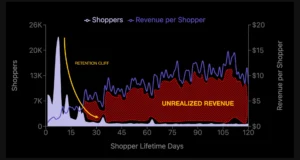
Challenge: Identifying which product will maximize customer lifetime value while minimizing the risk of list churn.
Standard Best Practices
Email marketers often view customer retention through the lens of upsell or cross-sell opportunities. They typically apply heuristic rules or similarity algorithms based on the past purchases of other customers to periodically promote related products. However, our data shows that these strategies alone have very limited success in email marketing.
Email Pulse
Email Pulse enables you to promote a wide range of products to build brand value and foster long-term relationships with your customers.
WHY: By going beyond narrow upsell and cross-sell options, you help your existing customers discover the full breadth and value of your brand’s products.
HOW: Email Pulse utilizes highly personalized product recommendations based on shoppers’ prior interactions with your brand.
In Closing
There’s no question that Retention.com offers a valuable new approach to engaging with visitors at the early stages of the buyer journey. When used effectively, it enables D2C brands to lower their customer acquisition costs.
If you’re looking to fully monetize your investment in Retention.com, Email Pulse can help you achieve improved revenue outcomes at every stage of the buyer journey.