Connecting AI to your marketing stack is easy. You can connect Claude or ChatGPT to Klaviyo, retrieve campaign data, analyze flows, summarize performance, and even trigger actions. That feels like transformation. It is not.
AI access is not AI success.
The Illusion of Prompt-Based Intelligence
When AI operates only through prompts, it behaves like a smart analyst. Ask a question. Get an answer. Refine the question. Get a slightly different answer.
That variability feels flexible. In operations, it becomes dangerous. If two team members ask similar questions and receive different interpretations, decisions drift. If those interpretations trigger automation, inconsistency compounds.
Prompt intelligence is conversational. Business performance requires structural intelligence.
The Real Problem Is Business Knowledge
Large language models are trained on words. They understand patterns in language. They do not understand how your business actually works.
They do not inherently know how your lifecycle stages interact, how margin influences acceptable CAC, how revenue baselines shift seasonally, how engagement relates to purchase frequency, or which metrics are leading versus lagging indicators.
When AI analyzes your Klaviyo dashboard, it sees numbers. It does not see your operating logic. Without embedded business rules, interpretation becomes probabilistic. It sounds intelligent. It is not structurally grounded.
Why This Matters
Two marketers can ask the same question: “Is this campaign performing well?”
Without structured modeling, AI might respond: “Yes, open rate is above average.” But above average compared to what? Industry benchmark? Last month? Seasonal baseline? Incremental lift versus non-exposed customers?
The model does not inherently know. It selects the most statistically plausible explanation based on language patterns. That is not business intelligence. That is linguistic inference. This is exactly the gap that Klaviyo AI Companion is built to close — embedding structured modeling and uplift-based scoring before any AI reasoning begins.
Business Logic Must Be Designed
AI becomes reliable only when domain expertise is encoded into the system. This requires defined performance baselines, lifecycle-aware thresholds, causal measurement rules, explicit signal classification, and guardrails around interpretation.
Modeling embeds business knowledge into AI outputs. Without it, AI explains. With it, AI decides. The difference between those two outcomes is the difference between an experiment and an operating system.
Scientific Scoring Creates Precision
Even structured signals are not enough if they rely on surface metrics. Open rates fluctuate. Clicks vary by campaign type. Revenue depends on seasonality.
True AI success requires causal measurement. Instead of asking “Did this perform well?” — the system asks “What changed because this was sent?” That question has a precise, brand-specific answer grounded in your own customer behavior. It is what separates AI automation modeling from dashboard analysis.
Consistency Is the Real Scaling Challenge
Scaling AI is not about adding more accounts. It is about preserving interpretation. In agencies, this means cross-client consistency. In single brands, this means cross-team consistency.
If two strategists get two different performance signals from the same dataset, AI becomes subjective. Subjective AI cannot automate safely. Designed AI can. This is the transition from experimentation to AI decision-making systems that actually hold up under operational pressure.
The AI-First Operating System
An AI-first operating system merges four layers:
- Access — retrieving data from marketing systems like Klaviyo via MCP
- Modeling — structuring metrics into defined signals with lifecycle context
- Scientific scoring — isolating incremental impact using uplift measurement
- Automation — executing decisions based on stable, repeatable rules
When these layers operate together, AI becomes predictable, secure, repeatable, and scalable. Without them, AI remains a prompt interface. With them, AI becomes operational infrastructure.
The Difference Between Asking and Designing
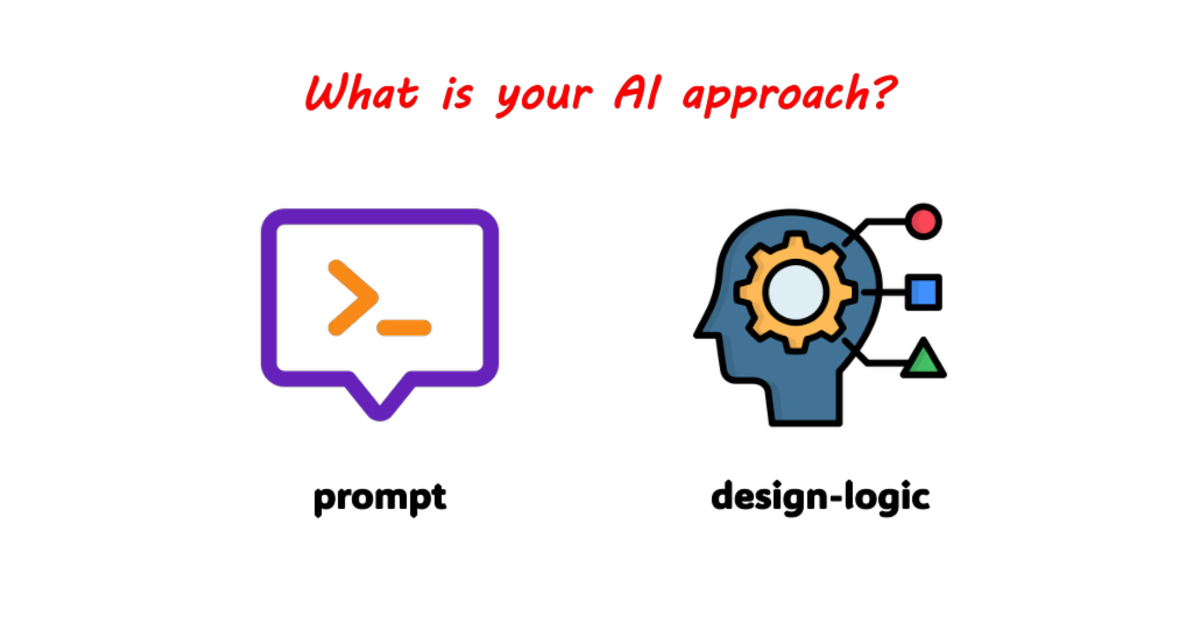
Prompt-based AI asks questions. Designed AI enforces structure. One depends on wording. The other depends on modeling. One varies by user. The other behaves consistently across teams and environments.
AI success is not about better prompts. It is about better systems.
FAQs
What does it mean that AI success is designed, not prompted? AI success requires structured modeling, domain knowledge, and consistent scoring logic built into the system before AI reasoning begins. Prompt-based interactions alone cannot produce stable automation decisions — they vary too much based on how questions are phrased.
Why aren’t large language models enough for business automation? Large language models understand language patterns, not business interdependencies. Without embedded business rules and modeling, AI interpretations remain probabilistic rather than operational — they explain rather than decide.
What is an AI-first operating system? An AI-first operating system integrates AI assistants with structured modeling, scientific scoring, and automation rules so that decisions remain consistent across teams, accounts, and sessions over time.
How does AI automation modeling improve consistency? AI automation modeling defines baselines, thresholds, and classification rules so outputs remain stable regardless of who asks the question or how it is phrased. Two strategists asking the same question get the same signal.
Why is uplift modeling important in AI systems? Uplift modeling measures incremental impact by comparing email-influenced customers with similar non-influenced customers. This ensures AI optimizes for causal effect instead of surface metrics or industry averages that don’t reflect your brand.
Can a single brand experience AI inconsistency? Yes. Even within one organization, different team members may receive different interpretations from AI if modeling and scoring logic are not standardized. The inconsistency is subtle at first, then compounds when automation is introduced.
What causes AI interpretation drift? Interpretation drift occurs when AI relies solely on prompts without embedded business logic. Different prompt phrasing or session context produces variable conclusions from the same data — the system has no fixed anchor.
What is the difference between AI tools and AI systems? AI tools generate insights on request. AI systems enforce structured decision logic, ensuring consistent automation and governance regardless of who is using the tool or how they phrase their queries.
Why is structured scoring necessary for automation? Automation requires decision-ready signals. Structured scoring converts descriptive metrics into standardized indicators that trigger consistent actions — without it, automation logic becomes fragile and prone to error.
How do brands and agencies build reliable AI automation? Reliable AI automation requires combining AI assistants with domain intelligence, scientific scoring, and unified signal modeling inside a designed system — not just a connected AI tool sitting on top of raw data.